
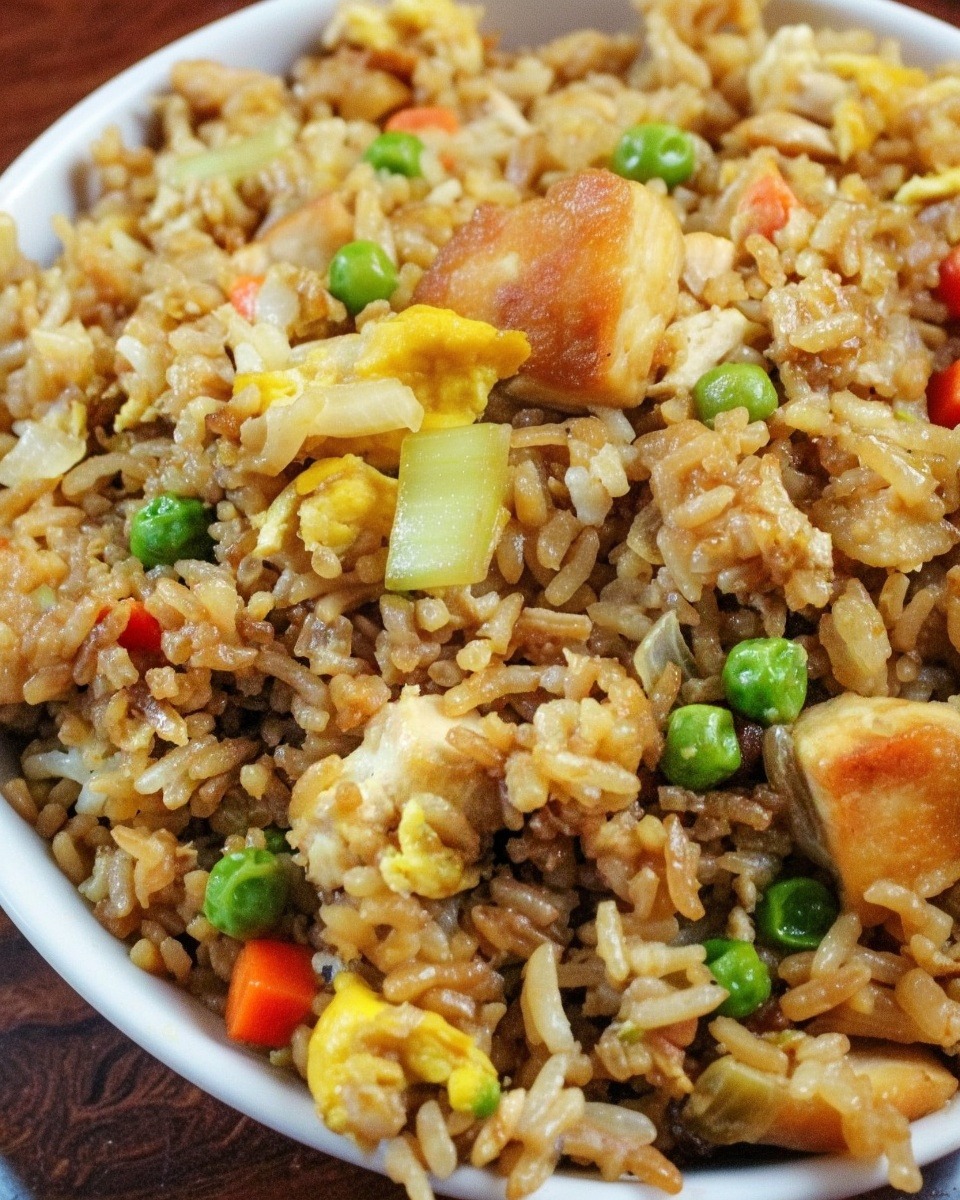
Why You Will Love This Recipe
Imagine the aroma of sizzling chicken and vegetables wafting through your kitchen as you whip up this delightful chicken fried rice. It’s a dish that’s not only quick and easy to prepare but also incredibly satisfying. Whether you’re cooking for a family dinner or a casual get-together, this recipe is sure to impress. The best part? It’s much healthier than takeout, with fresh ingredients and no hidden additives.
One of the reasons you’ll fall in love with this chicken fried rice is its versatility. You can easily customize it to suit your taste preferences or dietary needs. Plus, it’s a fantastic way to use up leftover rice and vegetables, making it both economical and environmentally friendly. With its rich flavors and inviting textures, this dish will quickly become a staple in your meal rotation.
Ingredients
- 2 cups cooked white rice (preferably day-old)
- 1 lb chicken breast, diced
- 2 tablespoons vegetable oil
- 1 cup frozen peas and carrots
- 3 green onions, sliced
- 2 cloves garlic, minced
- 3 tablespoons soy sauce
- 2 eggs, beaten
- Salt and pepper to taste
Step by Step Instructions
- Heat 1 tablespoon of vegetable oil in a large skillet or wok over medium-high heat. Add the diced chicken and cook until golden brown and cooked through, about 5-7 minutes. Remove the chicken from the skillet and set aside.
- In the same skillet, add the remaining tablespoon of oil. Add the garlic and cook for about 30 seconds until fragrant. Stir in the peas and carrots, and cook until tender, about 3-4 minutes.
- Push the vegetables to one side of the skillet and pour the beaten eggs onto the other side. Scramble the eggs until fully cooked, then mix them with the vegetables.
- Add the cooked rice and chicken back into the skillet. Pour the soy sauce over the mixture and stir well to combine. Cook for an additional 3-4 minutes, stirring occasionally, until everything is heated through.
- Season with salt and pepper to taste, sprinkle with sliced green onions, and serve hot.
You Must Know
To achieve the perfect texture for your chicken fried rice, it’s essential to use day-old rice. Freshly cooked rice tends to be too moist and can result in a mushy dish. If you don’t have leftover rice, simply spread freshly cooked rice on a baking sheet and let it cool in the refrigerator for about 30 minutes before using.
Another key tip is to make sure your skillet or wok is hot enough before adding the ingredients. This ensures that the chicken and vegetables sear quickly, locking in their flavors and preventing them from becoming soggy. A well-heated pan also helps in achieving that signature slightly crispy texture of fried rice.
Storage Tips
Chicken fried rice can be stored in an airtight container in the refrigerator for up to 4 days. To reheat, simply microwave it for a couple of minutes or heat it in a skillet over medium heat until warmed through. If the rice seems a bit dry, add a splash of water or soy sauce to restore moisture.
For longer storage, you can freeze chicken fried rice in portion-sized containers for up to 3 months. Thaw overnight in the refrigerator before reheating. This makes it a convenient option for meal prepping or for those busy nights when you need a quick dinner solution.
Ingredient Substitutions
If you’re looking to switch things up or accommodate dietary restrictions, there are plenty of substitution options. For a vegetarian version, simply omit the chicken and add more vegetables like bell peppers or broccoli. You can also use tofu as a protein alternative.
For a gluten-free version, ensure that you use gluten-free soy sauce. Additionally, you can substitute brown rice or quinoa for white rice if you prefer a whole-grain option. Feel free to experiment with different types of oil, such as sesame or coconut oil, to add a unique flavor twist.
Serving Suggestions
This chicken fried rice is a meal in itself, but you can elevate it by serving it alongside some complementary dishes. Consider pairing it with egg rolls, spring rolls, or a light Asian-inspired salad for a complete feast. A side of hot and sour soup or miso soup also makes for a comforting combination.
For a touch of sweetness, serve with a side of fresh pineapple or a fruit salad. The natural sweetness of the fruit balances the savory flavors of the fried rice beautifully. Don’t forget to garnish with extra green onions or a sprinkle of sesame seeds for an added touch of elegance.
Cultural Context
Fried rice is a beloved dish across many Asian cultures, each with its own unique twist. Originating from China, it was traditionally a way to use up leftover rice and ingredients, minimizing waste. Over time, it has become a staple in many households and restaurants worldwide, celebrated for its adaptability and comforting flavors.
In the context of Chinese-American cuisine, chicken fried rice has become a popular choice, often featured in takeout menus. It embodies the fusion of traditional techniques with local ingredients, resulting in a dish that is both familiar and exotic. Making it at home allows you to appreciate its rich history while enjoying a personalized culinary experience.
Pro Tips
For the best results, always prep all your ingredients before you start cooking. This ensures a smooth cooking process, as fried rice comes together quickly once you start. Keep your ingredients organized and within reach for a seamless experience.
Don’t be afraid to experiment with additional flavors. A dash of oyster sauce or hoisin sauce can add depth to your fried rice. If you like a bit of heat, consider adding a pinch of red pepper flakes or a splash of sriracha. These small adjustments can elevate your dish to new heights.
Recipe FAQs
Can I use other types of meat?
Absolutely! This recipe is versatile and works well with shrimp, pork, or beef. Just adjust the cooking time accordingly to ensure your meat is cooked through.
What if I don’t have a wok?
No worries! A large skillet will work just fine. The key is to ensure it is hot enough before adding your ingredients to achieve the desired texture.
How can I make it less salty?
If you’re concerned about sodium, use a low-sodium soy sauce and taste as you go. You can always add more salt later if needed.