
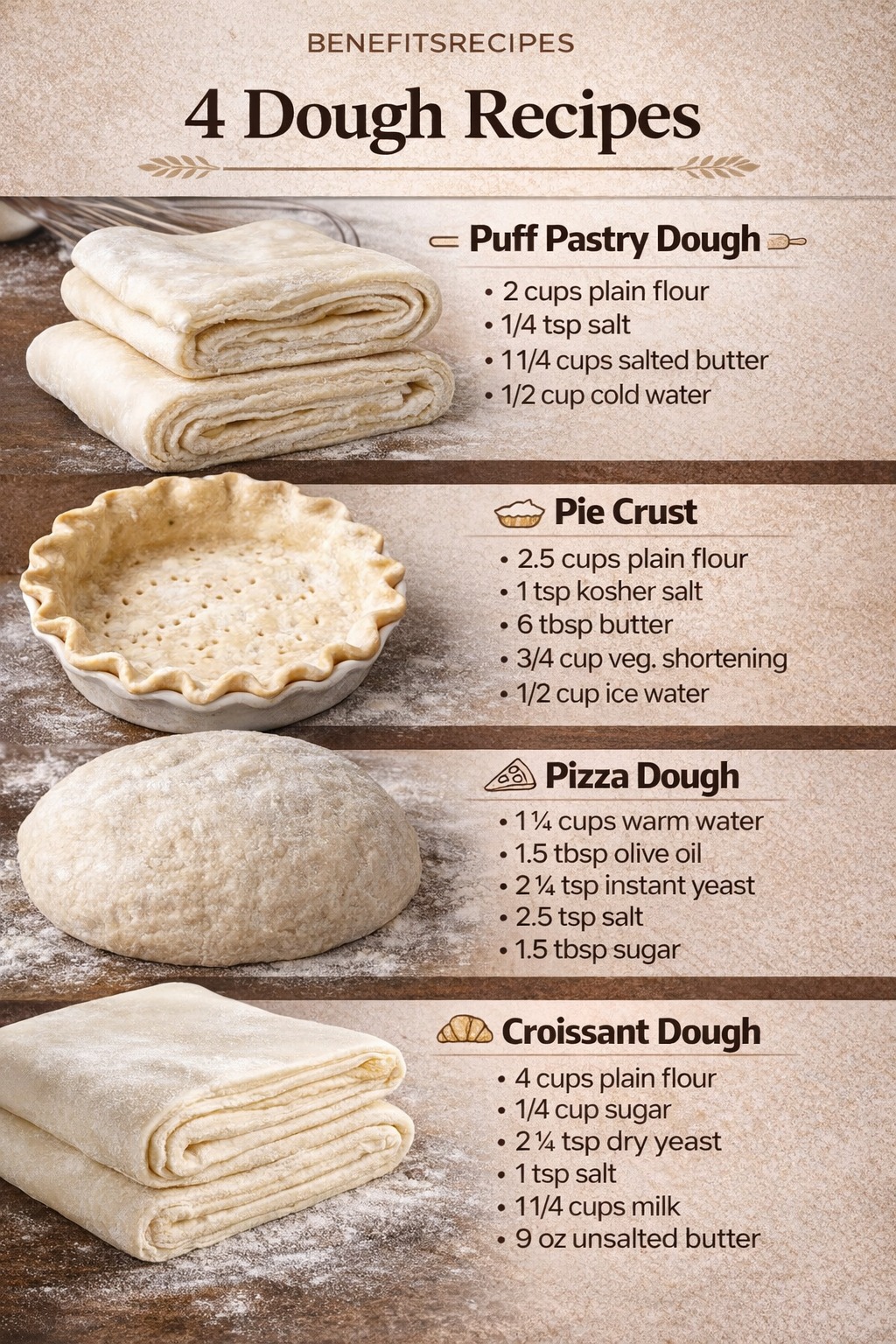
Why You Will Love This Recipe
These four essential doughs are the backbone of countless delicious recipes, each bringing its own unique texture and flavor to the table. Mastering them not only enhances your baking repertoire but also opens up a world of culinary possibilities. Imagine the satisfaction of pulling a perfectly flaky pie crust or a buttery, layered croissant from your oven, knowing you crafted it from scratch. These doughs are versatile, allowing you to create both sweet and savory dishes that will impress family and friends alike.
Each dough has its own story and purpose. Puff pastry is known for its delicate layers and buttery taste, perfect for both desserts and appetizers. Pie crusts offer a sturdy yet tender base for your favorite fillings, while pizza dough provides a chewy, flavorful canvas for toppings. Croissant dough, with its rich, buttery layers, is a breakfast staple that can also be transformed into decadent desserts. Learning to make these doughs from scratch will not only improve your baking skills but also give you a deeper appreciation for the art of baking.
Ingredients
Puff Pastry
- 2 1/2 cups all-purpose flour
- 1 cup unsalted butter, chilled and diced
- 1/2 teaspoon salt
- 3/4 cup ice water
Pie Crust
- 2 1/2 cups all-purpose flour
- 1 teaspoon salt
- 1 teaspoon sugar
- 1 cup unsalted butter, chilled and diced
- 6 to 8 tablespoons ice water
Pizza Dough
- 4 cups all-purpose flour
- 1 1/2 cups warm water
- 1 packet (2 1/4 teaspoons) active dry yeast
- 2 tablespoons olive oil
- 1 teaspoon salt
Croissant Dough
- 4 cups all-purpose flour
- 1/2 cup warm milk
- 1/2 cup warm water
- 1/4 cup sugar
- 1 tablespoon active dry yeast
- 1 teaspoon salt
- 1 cup unsalted butter, chilled and divided
Step by Step Instructions
Puff Pastry
- In a large bowl, combine flour and salt. Add diced butter and mix until the mixture resembles coarse crumbs.
- Gradually add ice water, mixing until the dough just comes together. Be careful not to overmix.
- Wrap the dough in plastic wrap and refrigerate for at least 1 hour.
- Roll out the dough on a floured surface, fold into thirds, and repeat this process three times to create layers.
Pie Crust
- Mix flour, salt, and sugar in a bowl. Add butter and blend until the mixture resembles coarse crumbs.
- Sprinkle ice water, one tablespoon at a time, mixing until the dough holds together.
- Divide the dough in half, shape into discs, wrap in plastic, and refrigerate for at least 1 hour.
- Roll out on a floured surface to your desired thickness before using.
Pizza Dough
- In a bowl, dissolve yeast in warm water. Let sit until foamy, about 5 minutes.
- Add flour, olive oil, and salt. Mix until a dough forms.
- Knead on a floured surface until smooth and elastic, about 10 minutes.
- Place in a greased bowl, cover, and let rise until doubled in size, about 1 hour.
Croissant Dough
- Mix milk, water, sugar, and yeast in a bowl. Let sit until foamy, about 5 minutes.
- Add flour and salt. Mix until a dough forms.
- Knead until smooth, about 5 minutes. Let rise until doubled, about 1 hour.
- Roll out dough, layer with butter, and fold to create layers. Chill between folds.
You Must Know
Understanding the nuances of each dough is crucial to achieving the perfect texture and flavor. Puff pastry requires patience and precision with its folding technique to ensure those signature flaky layers. The key to a tender pie crust is to handle the dough as little as possible to prevent gluten development, which can make it tough. For pizza dough, the kneading process is essential to develop the gluten that gives it its chewy texture. Croissant dough, with its buttery layers, requires careful attention to temperature and timing during the lamination process.
Each dough has its ideal resting time, which allows the gluten to relax and the flavors to meld. This step is essential for achieving the right texture and making the dough easier to work with. Additionally, using high-quality ingredients, such as unsalted butter and fresh yeast, can significantly impact the final product. Remember, practice makes perfect, and each attempt will bring you closer to mastering these essential doughs.
Storage Tips
Proper storage is key to maintaining the freshness and quality of your doughs. For puff pastry and pie crust, wrap the dough tightly in plastic wrap and store it in the refrigerator for up to three days. If you need to store it longer, consider freezing it for up to three months. When ready to use, thaw in the refrigerator overnight. Pizza dough can be refrigerated for up to two days or frozen for up to three months. To freeze, portion the dough and wrap each piece tightly in plastic wrap before placing it in a freezer bag.
Croissant dough requires a bit more care due to its butter content. After the initial rise, you can refrigerate it for up to two days. For longer storage, freeze the dough after shaping the croissants but before the final rise. When ready to bake, allow them to thaw and rise in the refrigerator overnight. Properly storing these doughs ensures that you always have the base for a delicious meal or treat on hand.
Ingredient Substitutions
While these recipes use traditional ingredients, there are several substitutions you can make based on dietary needs or preferences. For a gluten-free option, substitute all-purpose flour with a gluten-free flour blend. Keep in mind that the texture may vary slightly. If you’re looking to reduce fat, you can replace some of the butter with a plant-based alternative, though this may affect the flavor and texture, particularly in puff pastry and croissant dough.
For those avoiding dairy, use a dairy-free butter substitute and plant-based milk in the croissant dough. Olive oil can be used in place of butter in pizza dough for a different flavor profile. Remember, experimenting with substitutions can lead to exciting new flavors and textures, so don’t be afraid to try something new!
Serving Suggestions
Each of these doughs can be transformed into a variety of delicious dishes. Puff pastry is perfect for creating elegant appetizers like cheese straws or sweet treats like fruit tarts. A classic pie crust is ideal for both sweet and savory pies, from apple to chicken pot pie. Pizza dough offers endless possibilities, from traditional Margherita to creative toppings like prosciutto and arugula.
Croissant dough can be used to make classic croissants, filled with chocolate or almond paste, or even savory versions with ham and cheese. Serve these creations at brunch, dinner parties, or as a special treat for yourself. The versatility of these doughs means you’ll never run out of ideas for delicious meals and snacks.
Cultural Context
Each of these doughs has a rich history and cultural significance. Puff pastry, with its roots in French cuisine, is a testament to the art of lamination and the pursuit of culinary perfection. Pie crusts have been a staple in many cultures, from the savory meat pies of England to the sweet fruit pies of America, each telling a story of tradition and comfort.
Pizza dough, originating from Italy, has become a global favorite, with each region adding its own twist to this beloved dish. Croissant dough, another French classic, embodies the elegance and indulgence of French pastry. Understanding the cultural context of these doughs adds depth to your baking experience and connects you to the rich culinary traditions they represent.
Pro Tips
Achieving perfect dough requires attention to detail and a few insider tips. For puff pastry, keep everything cold, including your hands, to prevent the butter from melting during the folding process. When making pie crust, use a food processor for quick and even mixing without overworking the dough. For pizza dough, a long, slow rise in the refrigerator can enhance the flavor and texture.
When working with croissant dough, ensure your butter block is the same consistency as the dough for even layering. Practice patience and precision, and don’t rush the process. These tips will help you achieve professional-quality results and boost your confidence in the kitchen.
Recipe FAQs
Can I make these doughs in advance?
Yes, all of these doughs can be made ahead of time and stored in the refrigerator or freezer. This allows you to have them ready for when inspiration strikes.
What if my dough isn’t rising?
If your dough isn’t rising, check the expiration date on your yeast and ensure your liquids are at the correct temperature. Yeast needs warmth to activate, but too much heat can kill it.
How do I prevent my pie crust from shrinking?
To prevent shrinkage, avoid stretching the dough when placing it in the pie dish, and allow it to rest in the refrigerator before baking.