
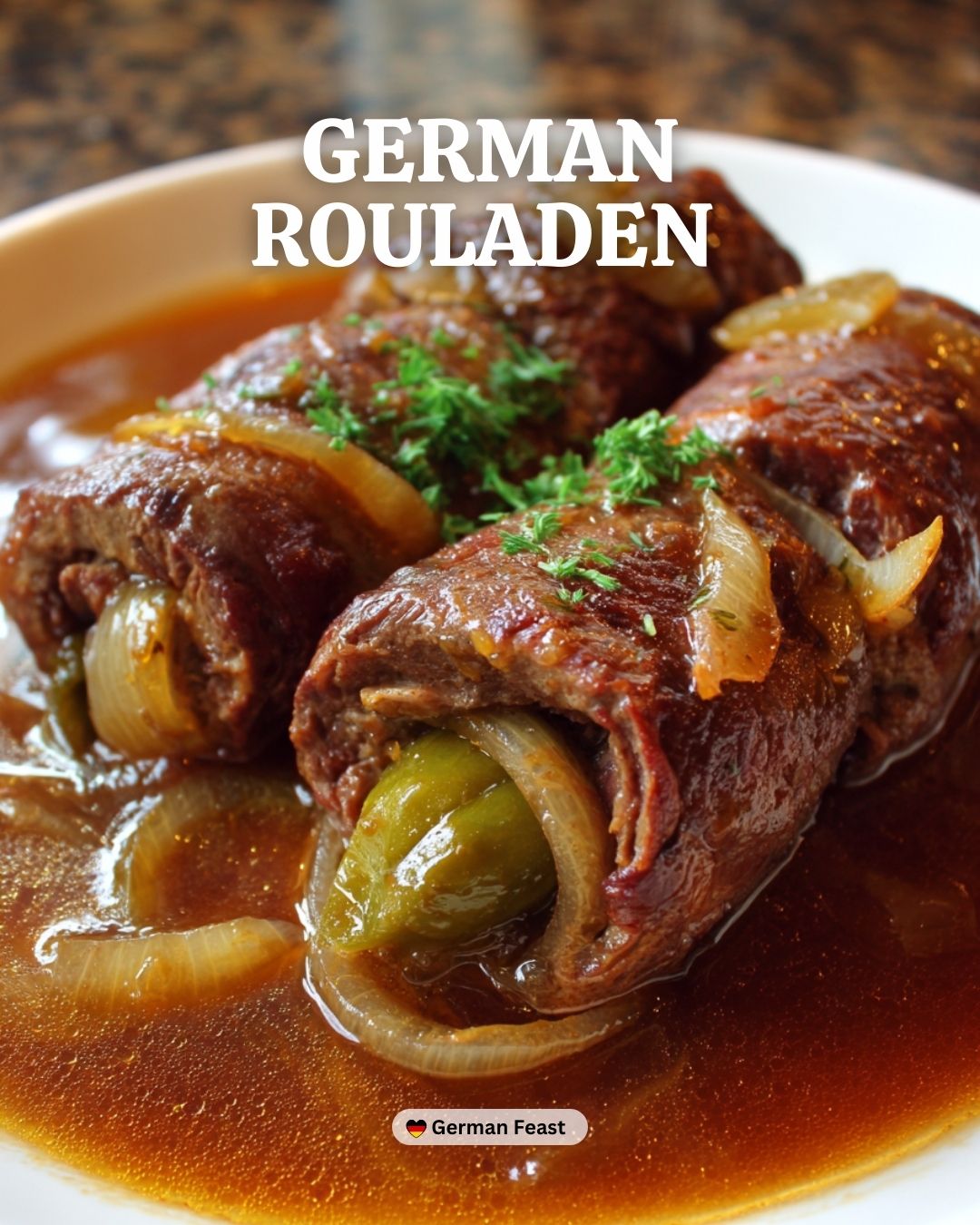
Why You Will Love This Recipe
If you’re looking for a dish that embodies the warmth and tradition of German cuisine, look no further than Rouladen. This classic dish is a delightful combination of tender beef, savory bacon, tangy pickles, and spicy mustard, all rolled up into a flavorful package. It’s a comforting meal that’s perfect for family gatherings or a cozy dinner at home. The rich aroma that fills your kitchen as it simmers away will transport you straight to a rustic German countryside.
What makes this recipe truly special is its ability to bring people together. The process of preparing Rouladen is a labor of love, and sharing it with loved ones is a cherished experience. Whether you’re a seasoned cook or a beginner, you’ll find joy in crafting this dish, and the end result is sure to impress. Plus, Rouladen is a versatile dish that pairs beautifully with a variety of sides, making it a wonderful centerpiece for any meal.
Ingredients
Gathering the right ingredients is the first step to creating an unforgettable Rouladen. Here’s what you’ll need:
- 4 thin slices of beef (top round or flank steak)
- 4 slices of bacon
- 4 tablespoons of mustard
- 1 large onion, finely chopped
- 4 pickles, sliced lengthwise
- Salt and pepper to taste
- 2 tablespoons of vegetable oil
- 2 cups of beef broth
- 1 tablespoon of flour
- 1 tablespoon of butter
Step by Step Instructions
- Prepare the Beef: Lay out the beef slices on a clean surface. Spread a tablespoon of mustard over each slice, then season with salt and pepper.
- Add the Fillings: Place a slice of bacon, a few onion pieces, and pickle slices on each beef slice. Roll them up tightly and secure with toothpicks or kitchen twine.
- Brown the Rouladen: Heat the vegetable oil in a large skillet over medium heat. Add the rouladen and brown on all sides, about 8-10 minutes total.
- Simmer: Pour in the beef broth, reduce the heat to low, cover, and let simmer for 1.5 to 2 hours until the beef is tender.
- Make the Gravy: Remove the rouladen and keep warm. In the same skillet, melt the butter and stir in the flour to create a roux. Gradually add the cooking liquid, stirring constantly, until the gravy thickens.
- Serve: Remove the toothpicks or twine from the rouladen, slice, and serve with the gravy drizzled on top.
You Must Know
Rouladen is a dish that requires patience and attention to detail. The key to a successful rouladen is in the rolling and securing of the beef rolls. Ensuring that they are tightly packed will help retain the flavors and prevent the fillings from spilling out during cooking. Additionally, the slow simmering process is crucial for achieving that melt-in-your-mouth tenderness that makes Rouladen so beloved.
It’s also important to select the right cut of beef. Top round or flank steak works beautifully due to their ability to absorb flavors and become tender with slow cooking. Don’t rush the simmering process; let the flavors develop fully for the best results.
Storage Tips
If you have leftovers, Rouladen stores exceptionally well. Allow the rouladen to cool to room temperature before transferring them to an airtight container. They can be refrigerated for up to 3 days. When reheating, do so gently on the stovetop or in the oven to maintain the tenderness of the beef.
For longer storage, you can freeze rouladen. Wrap each roll individually in plastic wrap, then place them in a freezer-safe bag. They will keep in the freezer for up to 3 months. Thaw in the refrigerator overnight before reheating.
Ingredient Substitutions
If you need to make adjustments to the ingredients, there are a few substitutions you can consider. For a lighter version, turkey bacon can be used in place of traditional bacon. If you prefer a different mustard flavor, Dijon or whole grain mustard can add a unique twist. For those avoiding beef, chicken or pork can be used, though cooking times may vary.
Vegetarians can also enjoy a version of this dish by using large portobello mushrooms or eggplant slices in place of beef, and omitting bacon. The essence of rouladen can be captured with creative fillings and spices.
Serving Suggestions
Rouladen is traditionally served with hearty sides that complement its rich flavors. Consider pairing it with creamy mashed potatoes, buttery spaetzle, or tangy red cabbage. A crisp green salad with a light vinaigrette can also provide a refreshing contrast to the savory rouladen.
For a complete German feast, serve rouladen with a side of sauerkraut and warm pretzels. A glass of robust red wine or a cold German beer can round out the meal perfectly, enhancing the dining experience.
Cultural Context
Rouladen is a dish steeped in German tradition, often associated with Sunday dinners and festive occasions. It reflects the German love for hearty, comforting meals that bring families together. The dish’s origins can be traced back to the culinary influences of neighboring countries, with variations found in Polish and Czech cuisines as well.
In Germany, rouladen is a staple during the colder months, providing warmth and sustenance. It’s a dish that has been passed down through generations, with each family adding their unique touches. This cultural heritage makes rouladen not just a meal, but a celebration of German culinary history.
Pro Tips
To ensure your rouladen is as flavorful as possible, don’t skimp on the mustard and pickles. These ingredients are essential for that authentic taste. When browning the rouladen, make sure your pan is hot enough to achieve a good sear, which will enhance the flavor of the final dish.
For an even richer gravy, consider adding a splash of red wine to the beef broth during simmering. This will add depth and complexity to the sauce. Also, be sure to taste and adjust the seasoning of the gravy before serving to ensure it’s perfectly balanced.
Recipe FAQs
Can I make rouladen ahead of time? Yes, rouladen can be prepared a day in advance. Simply follow the recipe up to the simmering step, then refrigerate. Reheat gently before serving.
What if I don’t have beef broth? If you’re out of beef broth, you can use chicken or vegetable broth as an alternative, though the flavor will be slightly different.
How do I prevent the rouladen from falling apart? Ensuring the rolls are tightly secured with toothpicks or twine is key. Also, handle them gently during browning and simmering to maintain their shape.