
Why You Will Love This Recipe
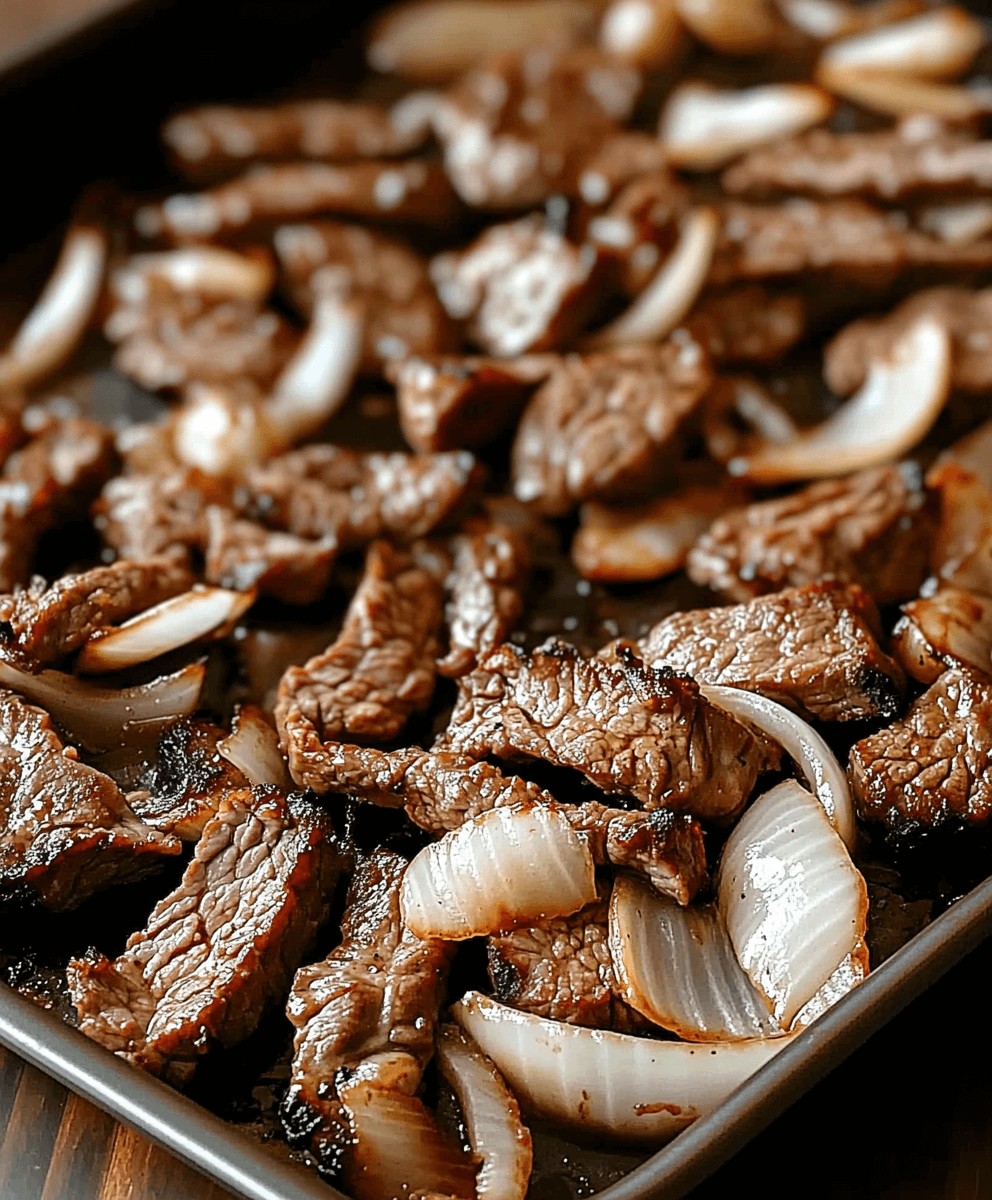
Imagine coming home after a long day and craving something delicious yet effortless. This easy sheet pan beef bulgogi is your answer. It’s a delightful twist on traditional Korean barbecue, bringing all those rich, savory flavors into a convenient, one-pan meal. The marinade, a perfect balance of soy sauce, sesame oil, garlic, and ginger, infuses the beef with a depth of flavor that’s both comforting and exciting.
Not only is this recipe quick to prepare, but it also requires minimal cleanup, making it ideal for busy weeknights or lazy weekends. The aroma that fills your kitchen as it cooks is absolutely irresistible, and the taste will have everyone at the table asking for seconds. Plus, it’s a fantastic way to introduce your family to the vibrant flavors of Korean cuisine without the need for specialty equipment or hard-to-find ingredients.
Ingredients
- 1 pound beef sirloin, thinly sliced
- 1/4 cup soy sauce
- 2 tablespoons sesame oil
- 3 cloves garlic, minced
- 1 tablespoon fresh ginger, grated
- 2 tablespoons brown sugar
- 1 tablespoon rice vinegar
- 1/2 teaspoon red pepper flakes
- 1 large onion, sliced
- 1 red bell pepper, sliced
- 2 green onions, chopped
- Sesame seeds for garnish
Step by Step Instructions
- Prepare the Marinade: In a large mixing bowl, combine the soy sauce, sesame oil, garlic, ginger, brown sugar, rice vinegar, and red pepper flakes. Stir until the sugar is dissolved and the ingredients are well mixed.
- Marinate the Beef: Add the thinly sliced beef to the marinade, ensuring each piece is well coated. Cover the bowl and let it marinate in the refrigerator for at least 30 minutes, or up to 2 hours for more intense flavor.
- Preheat and Prepare the Vegetables: Preheat your oven to 400°F (200°C). While the oven is heating, slice the onion and red bell pepper, and chop the green onions.
- Assemble on the Sheet Pan: Spread the marinated beef evenly on a large sheet pan. Add the sliced onion and bell pepper, mixing slightly to distribute the marinade.
- Bake: Place the sheet pan in the preheated oven and bake for 15-20 minutes, or until the beef is cooked through and the vegetables are tender.
- Garnish and Serve: Remove from the oven, sprinkle with chopped green onions and sesame seeds, and serve hot with steamed rice or noodles.
You Must Know
One of the secrets to achieving the authentic taste of bulgogi is the thin slicing of the beef. If you find it challenging to slice the beef thinly, try partially freezing it for about 30 minutes before cutting. This will make it easier to get those perfect slices. Additionally, the marinating time is crucial for allowing the flavors to penetrate the meat thoroughly. While 30 minutes is sufficient, letting it sit for a couple of hours will enhance the taste significantly.
Another tip is to ensure your oven is fully preheated before baking. This helps in achieving a nice caramelization on the beef and vegetables, which is essential for that rich, savory flavor. Don’t overcrowd the sheet pan, as this can lead to steaming rather than roasting, which will affect the texture and flavor.
Storage Tips
If you have leftovers, they can be stored in an airtight container in the refrigerator for up to 3 days. To reheat, simply place the beef and vegetables on a microwave-safe plate and heat until warmed through. Alternatively, you can reheat them in a skillet over medium heat for a few minutes, which will help retain the texture and flavor.
For longer storage, consider freezing the marinated beef before cooking. Place it in a freezer-safe bag, remove as much air as possible, and freeze for up to 3 months. When ready to cook, thaw it overnight in the refrigerator and proceed with the baking instructions.
Ingredient Substitutions
If you’re missing some ingredients or want to make some changes, here are a few substitutions that work well. For a gluten-free version, use tamari instead of soy sauce. If you don’t have rice vinegar, apple cider vinegar can be a good substitute. For those who prefer a milder dish, reduce or omit the red pepper flakes.
Vegetarians can replace the beef with firm tofu or mushrooms, which will also absorb the marinade beautifully. Additionally, you can add other vegetables like zucchini or carrots for more variety and nutrition.
Serving Suggestions
This sheet pan beef bulgogi pairs wonderfully with a bowl of steamed jasmine or basmati rice, which soaks up the delicious sauce. You can also serve it with noodles, such as soba or udon, for a different texture. A side of kimchi or pickled vegetables adds a refreshing contrast to the rich flavors of the bulgogi.
For a complete meal, consider adding a simple green salad or some steamed broccoli on the side. The freshness of the greens complements the savory beef perfectly, making it a well-rounded and satisfying dish.
Cultural Context
Bulgogi, which translates to “fire meat,” is a beloved dish in Korean cuisine, traditionally cooked over an open flame. It’s known for its sweet and savory marinade that tenderizes the meat and infuses it with flavor. This dish has been a staple in Korean households for generations, often enjoyed during family gatherings and celebrations.
The sheet pan version of bulgogi is a modern adaptation, making it more accessible for home cooks around the world. It retains the essence of the traditional dish while simplifying the cooking process, allowing more people to enjoy the delicious taste of Korea in their own kitchens.
Pro Tips
For the best results, use a high-quality beef cut such as sirloin or ribeye, which are tender and flavorful. When slicing the beef, aim for uniform thickness to ensure even cooking. If you’re in a hurry, you can skip the marinating step, but keep in mind that the flavors will be less pronounced.
To enhance the presentation, consider garnishing with additional fresh herbs like cilantro or basil. These add a pop of color and a fresh aroma that complements the dish beautifully. Lastly, if you enjoy a bit of crunch, sprinkle some toasted sesame seeds or crushed peanuts on top before serving.
Recipe FAQs
Can I use chicken instead of beef? Yes, chicken thighs or breasts can be used as a substitute. Adjust the cooking time as needed to ensure the chicken is cooked through.
What can I do if I don’t have sesame oil? While sesame oil adds a distinct flavor, you can substitute it with olive oil or another neutral oil. The taste will be slightly different, but it will still be delicious.
How can I make this dish spicier? To add more heat, increase the amount of red pepper flakes or add a dash of gochujang, a Korean chili paste, to the marinade.